Unsure of how to give your wisteria its winter prune?  Check out this video and you should be confident to get on with the job. The winter prune not only keeps the plant tidy, but also helps to produce more flowers.

Please remember that wisteria seeds are poisonous to dogs, so don’t let them fall to the ground where dogs could find them.  When I am pruning high up a ladder, I cut off the seed pod and put it in my pocket and then trim off the rest of the stalk and let that fall to the ground.  When the job is finished, I obviously tidy up well to make sure that I didn’t miss anything.

If you found this useful, don’t forget to check out our other videos.

As winter approaches, thoughts move to tidying up in the garden.  Thankfully, the garden hasn’t yet totally succumbed to the weather.  The problem is that I am not allowed to do anything that would aggravate my hernia.  Lifting and gardening are out of the question at the moment.  Hopefully I should have an operation in a couple of weeks and then I can get back to normal, but for now I can’t even sweep the paths.

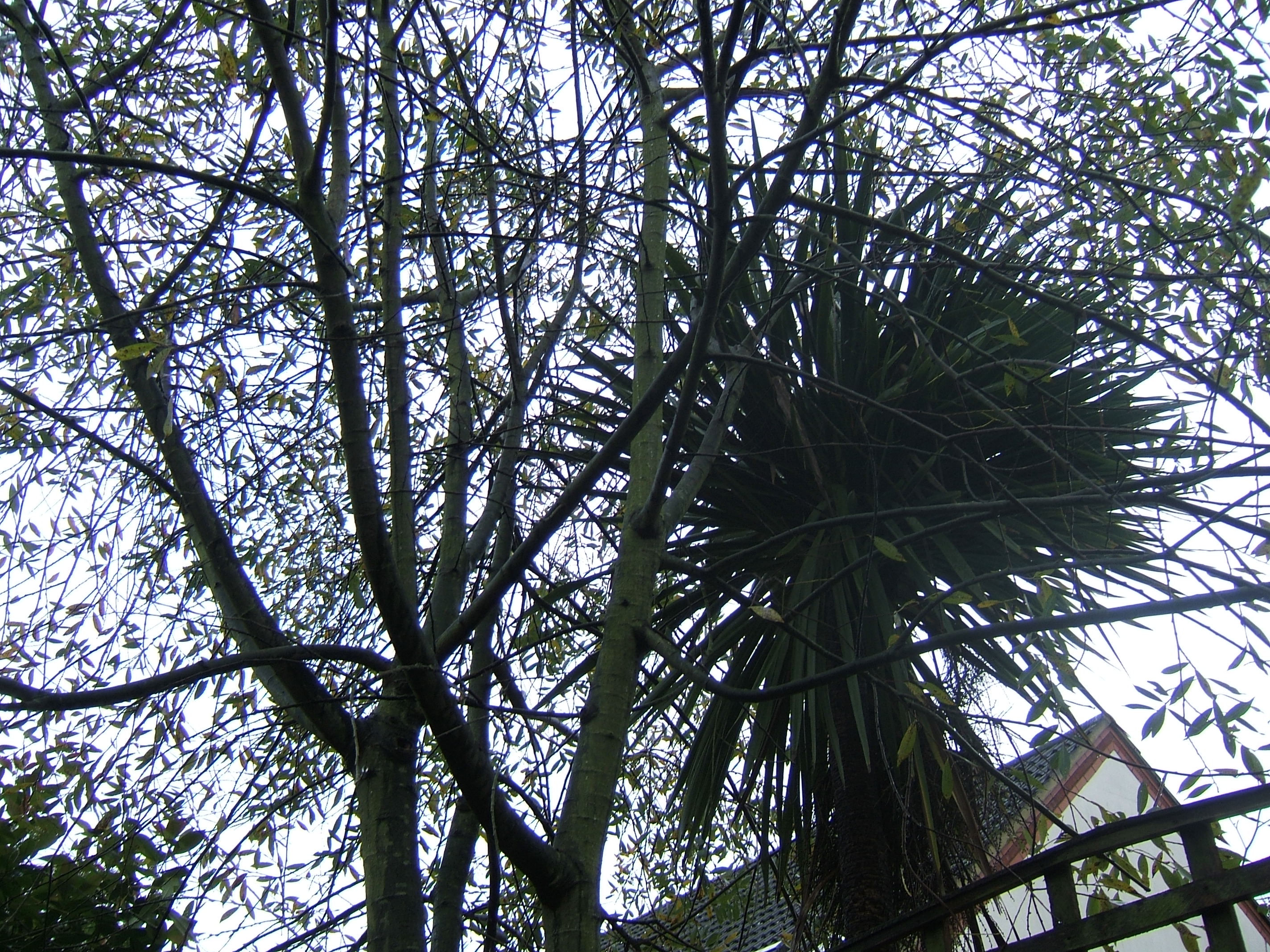
So, my thoughts must turn to plans for the garden.  I have a beautiful willow that I have always planned to pollard.  Pollarding is a very useful technique for keeping trees of a size suitable for their surroundings.  Tree roots will only grow as large as the canopy that they need to support, so there will be less chance of the roots having any impact on surrounding buildings.  An additional benefit from my perspective is that after a few years of being pollarded, the tree trunk takes on additional character even when it is not in leaf.  The downside may be that there is not very much leaf next year – we will have to wait and see how the tree takes to the process.
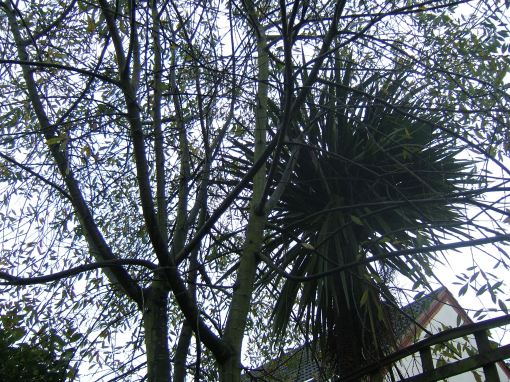
The trouble is that there are a couple fairly substantial branches that leave the main trunk a little too low and I am not sure which ones should be totally removed and where to start the pollarding.  While I am happy to do the actual work myself, my current plan is to find a tree surgeon who will give me the advice (for a fee of course) without necessarily having the job of doing the work.

For those of you who have wisteria, the winter prune should be done when the plant is dormant.  I try to do the job on 1 Jan or as close to that date as the weather conditions and work commitments allow.  I plan to video the process this year so that you can see where to prune and how much neater the plant looks when this year’s growth has been tidied up.  The added benefit of the winter pruning is that you will get even more flowers come the spring.

The roses are another group of plants that you need to think about pruning.  This is a good time to tidy up young roses that have not yet established a good root system.  I leave the main pruning until the spring. but where the plant has put on a lot of top growth, I shorten branches to half to two thirds  of their  height to reduce the impact of winter winds loosening them in the soil.

The rest of my shrubs get their hair cut in the spring when I can see the impact of the winter on them.  It seems a little non-productive to remove shoots that may survive the winter well and leave ones that might perish.  That said, I am very tempted to at least reduce the height of the cotinus that I have in front of the kitchen window.  I love the way it acts as a vegetative curtain, far enough from the window to let in light, but still screening us from neighbours.  However it is a little disconcerting when the plant reaches the height of the bedroom window.
This is a real garden and so not quite as pristine as one at the Chelsea Flower Show, but in my own way, I have an understanding of what those gardeners go through.   I am now at the titivating stage before next week’s NGS opening.

There is a path - I promise 🙂

For myself, I am happy to have the plants spilling over the paths in gay abandon, but I know that visitors would like to actually see the paths in front of them.  So this weekend, the job has been to persuade the plants to stay behind the border edging plant supports I have. 

Border plant supports – hopefully soon to be hidden

Whilst they are also made from metal and robust, they are different from the ones that I use to protect individual plants from the unwanted attentions of the dogs.  If you are interested in this type of support, check out Snape Stakes.  In the next week, the plants should grow enough to hide the supports whilst still benefitting from them.

Aqualegias are looking wonderful this year

I am spending my time wandering around the garden and watching for anything that looks out-of-place.  Never before have I had to dead headed Aquilegias as they are usually over by the time of the garden opening.  They are looking wonderful at the moment and I am just praying that they can manage to hold on for another week.

The bay that I had to avoid pruning earlier in the year as it was home to a blackbird nest has now had its annual trim, and the stock of bay leaves for the kitchen has been replenished.  Any yellow leaf that I see is whipped of the plant – everything is so late this year that the evergreen shrubs are still losing last year’s leaves.

Fallen wisteria flowers carpet

The big job left is sweeping the paths – this has to be done again and again.  The remnants of the wisteria’s flowers are still trying to carpet the garden.  Obviously they have competition from other plants which are dropping leaves and flowers too.  Then there are the bits of wood chip that the birds clear out of the way in their search for worms.  I used to blame the dogs for this until I realised that it happened even if the dogs hadn’t been out.

Less than a week's growth, the wisteria is trying to invade the house

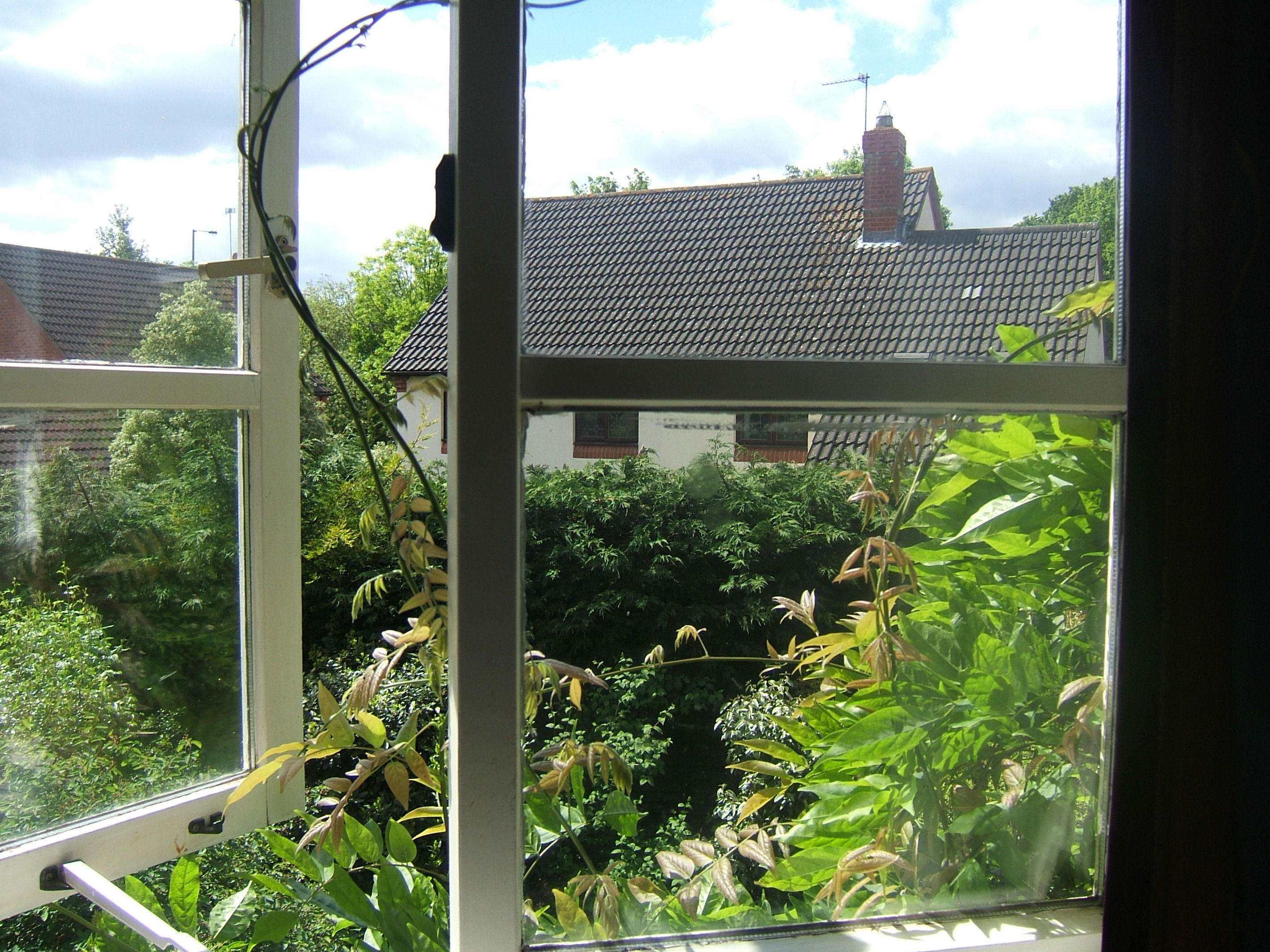
In other posts, I have mentioned that the wisteria is a thug.  It grows so fast that it can be hard to keep it under control.  One of my more unusual jobs is to go upstairs and prune what I can reach from the bedroom windows.

But next weekend, the garden will be lovely – and all the big jobs I have to do each year will be done.  After the opening, I can sit back and enjoy my garden without having to worry too much.