This is the International Year of Biodiversity, designed to focus us on the decline that is currently being seen and as a spur to get us to do something about it. The RHS is currently promoting this campaign. So what can you do to help?
Having a nice garden isn’t just about making life pleasant for your and your dogs, we all have a role to play in the biodiversity of our planet. As we increasingly use land for housing rather than agriculture, wildlife is depending more and more on our gardens for survival. There are many forms of wildlife that your gardening efforts can benefit.
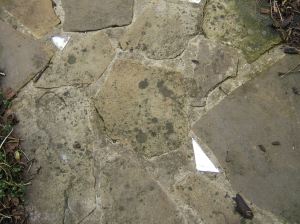
Lichen on York stone
When people talk about wildlife, we all naturally think of insects and birds, but let’s start a little lower down the food chain. I am lucky enough to have lichen in the garden. It loves my York stone paving. I used to worry that my pressure washing would remove it, but no, the lichen survives it just fine and continues to thrive. It is interesting to see that the lichen doesn’t seem to like the man-made paving that I have.
The more variety you have in your garden, the more forms of wildlife you can help and the more interesting your garden will be to look at. For an idea of the sort of plants you might want to grow, take a look at some recommended plants. You may also want to take a look at the RHS Plant Selector.
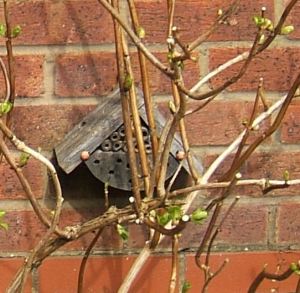
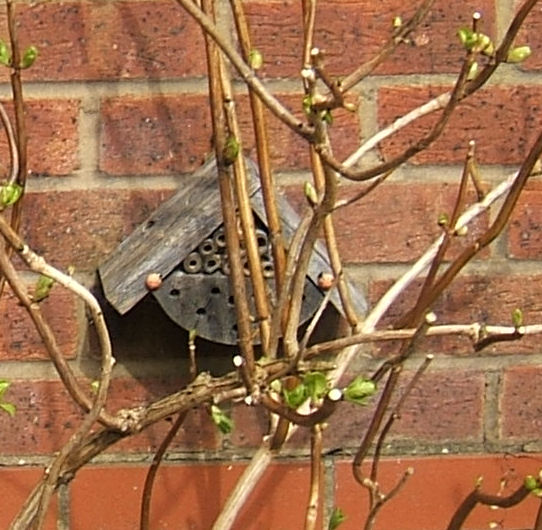
Ladybird Box
We are all used to the concept of nesting boxes, but have you thought about a ladybird box? Not only are ladybirds very pretty, but they also love to eat aphids, so encouraging them into your garden can reduce any aphid problem too.
If you do choose to have nesting boxes, then make sure they are in out of the way areas of your garden. I have a couple of nesting boxes. One is outside our kitchen window, which looks out onto a corner of the front garden. That part of the garden is little used, but very easy to see, so it is an absolutely perfect location. One benefit of having dogs is that you are unlikely to see cats in your garden, so the birds are free from that danger at least. Larger birds like to nest in large shrubs. A couple of weeks ago, I saw blackbirds building their nest somewhere in my Bay.
There are so many things that you can do to help improve biodiversity. Just having a garden is a great start, but how about thinking what you can do in your garden to help improve things just a little?



 Gardening and dogs