When people ask me the style of my garden, I say that is a modern cottage garden – so, what do I mean by that?
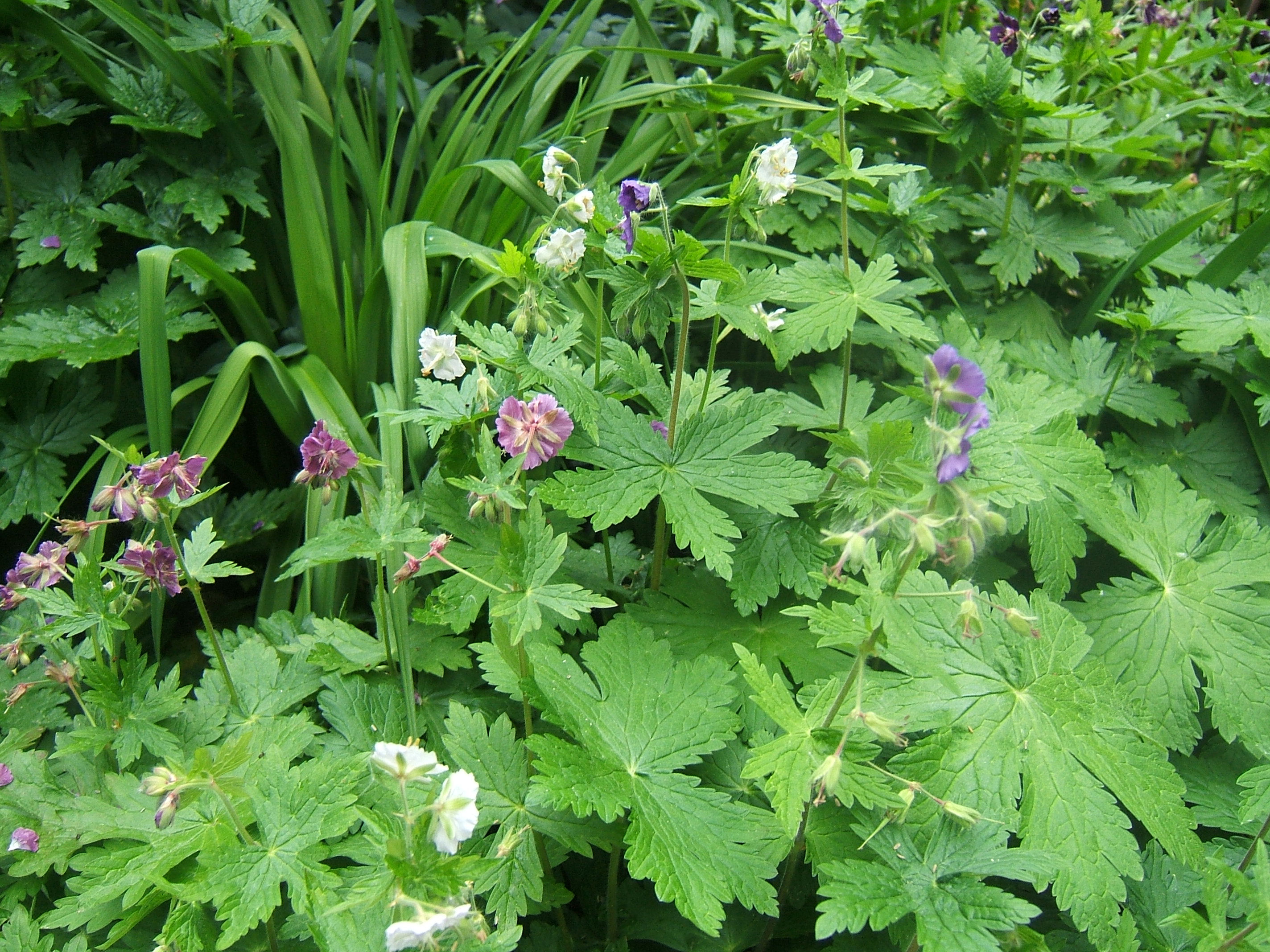
Well, I embrace the principles of cottage gardening, as I see them.
- I love the idea of having a garden overflowing with plants.
- Apart from the pond area, which has a totally different feel, the garden is not formal at all.
- There are no straight lines, everything is in curves from the paths to the pergola and the patio. Those decisions created the flowing borders, sometimes narrower and sometimes broader. There is a meandering feel to the garden.
- The materials are all traditional from the stone and slate paths to the wooden garden furniture.

There is no need for a time consuming lawn, this is a garden for someone who has a living to earn and wants somewhere peaceful to enjoy in the few hours that one gets to one’s self.
We do have an area of space by the house, which provides the breathing space that most people get from a lawn. I hate to call it a patio, but that is the best word to describe what I prefer to think of as a piece of art made from slate. As well as providing a simple space, it is designed to be large enough for a puppy play pen. It also looks even more lovely when it has rained as the slate seems to come alive when wet.
I hope that it is not too obvious when one walks around the garden, but all of this was planned – the garden didn’t just simply appear out of the ground. There was a great deal of forethought as to how to make the best use of the space available and how to take one on a journey through the garden.

Like most cottage gardens, mine is one that we work in too. My husband loves to BBQ and so that is catered for in the working area by the side of the house, along with the tomatoes and plants waiting to go in the ground, as well as our compost bin.
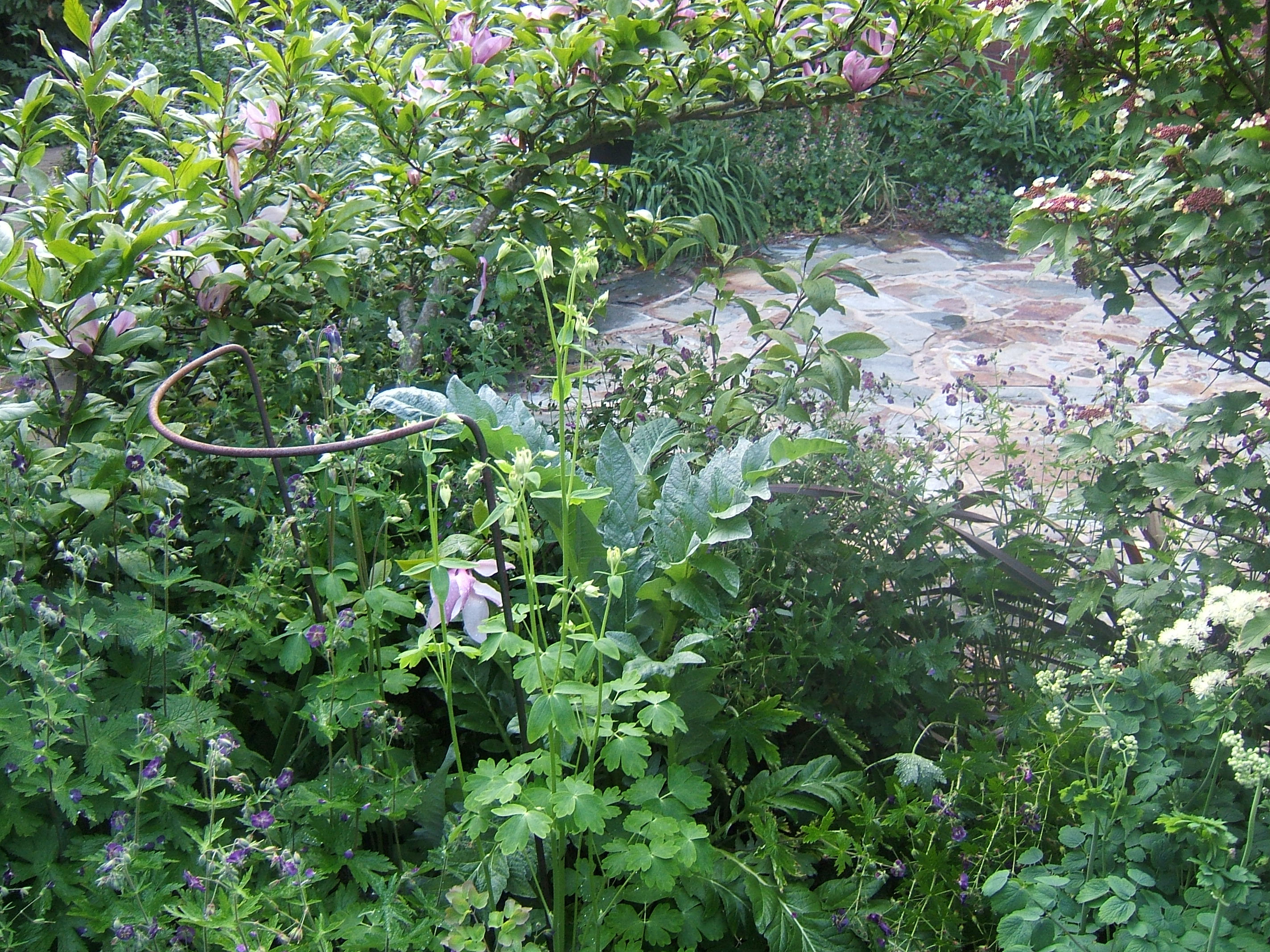
So, where are the “modern” elements? Firstly, I have a small garden which has to work for me all year, providing some sort of interest throughout the months. So rather than totally focusing on plants that are at their peak in mid summer, I have plants that come to their best at different times of the year. Rather than the garden blooming in a crescendo and then falling away, I like to have an ongoing wave of plants coming to their best at different times. That tends to mean that the predominant colour in my garden is green, in oh so many shades and leaf shapes, with certain plants in different areas of the garden which catch the eye at different times.

I also enjoy a much wider plant variety that was available to our ancestors. I happily mix ostespermums from South Africa in with the more common cottage garden plants such as aquilegias or geraniums. I have magnolias and other shrubs that would have been rather out of the price bracket of our forebears. I also can afford to buy plants rather than having to grow everything from seed, which is a good job as I don’t have much success with seeds.
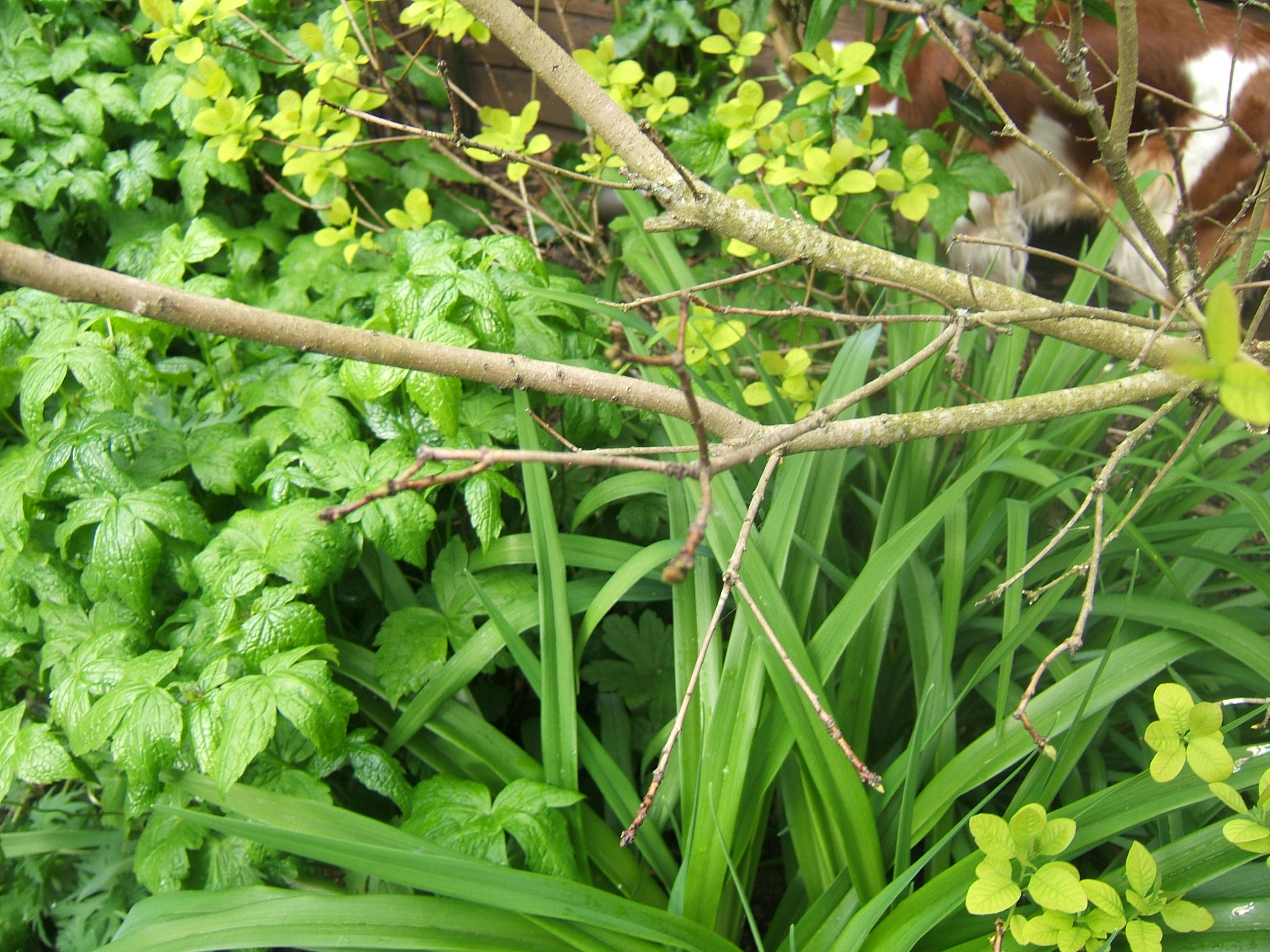
The one way in which I don’t follow the cottage garden planting bible is that I don’t grow food crops in the garden – apart from a few herbs in a pot. Maybe we are much more fastidious these days, but I would rather that things that I eat had not been too close to where my dogs might have relieved themselves.

I am certainly not averse to adding a few architectural elements to the garden, in the right places. In the middle of one of the borders, peering out from the planting that surrounds it, is a steel column with water flowing down its sides. It was never intended to be a bird drinking fountain, but the local population has decided that it makes a lovely source for fresh water.

My Lythrum (purple loostrife) grows to six feet plus in our clay soil, much taller that it is meant to. To ensure that it does not totally soak us when we walk past after rain, we tie it in to four tall black poles, made for me by a blacksmith. Before the lythrum grows to its full height each year, the poles give height to an area which mostly has herbaceous perennials and so could look a little bland without them.
PS All these pictures were taken this week, so it gives you an idea of what the garden is looking like today – how is yours doing?


 Gardening and dogs