Gardeners Diary


Well, having gone virtually straight from Winter to Summer, we are certainly having one of those memorable seasons!  It isn’t very often that the UK has an extended period of time in the high 20°s C.  Usually we think we are lucky to have a week of temperatures in the 20°s.  So far, we have had 10 days of this sort of weather and it looks set to continue for at least another week.

Luckily, there has been so much rain over the last year that the majority of the plants are still looking great and, apart from the pots, I have not had to resort to watering until the last few days.  However, a few plants in different areas of the garden are not starting to look stressed and so have been doused.  The funny thing is that the plants that I normally expect to complain about lack of water as yet are looking fine.  In order to save water, I am concentrating my efforts only on the plants that look to be in need of water.

Roses and aquilegias 2013

In a previous post, I mused at to whether we might have roses and aquilegias out at the same time this year as I had previously seen in Canada – well we did.  Admittedly, a few of the aqualegias had gone over, but I like to leave the seed heads in place to get even more plants in future years.

The dogs are, of course, moulting for England to try and keep cool.  Ice cubes in their water bowls help and on walks, they race for every remaining puddle.  At home, they put up with showers from the garden hose, but at least none has, so far, decided to take a dip in the pond!

Enjoy the weather while it lasts – this is England, so it won’t be long before we are back to cloudy skies and showers!
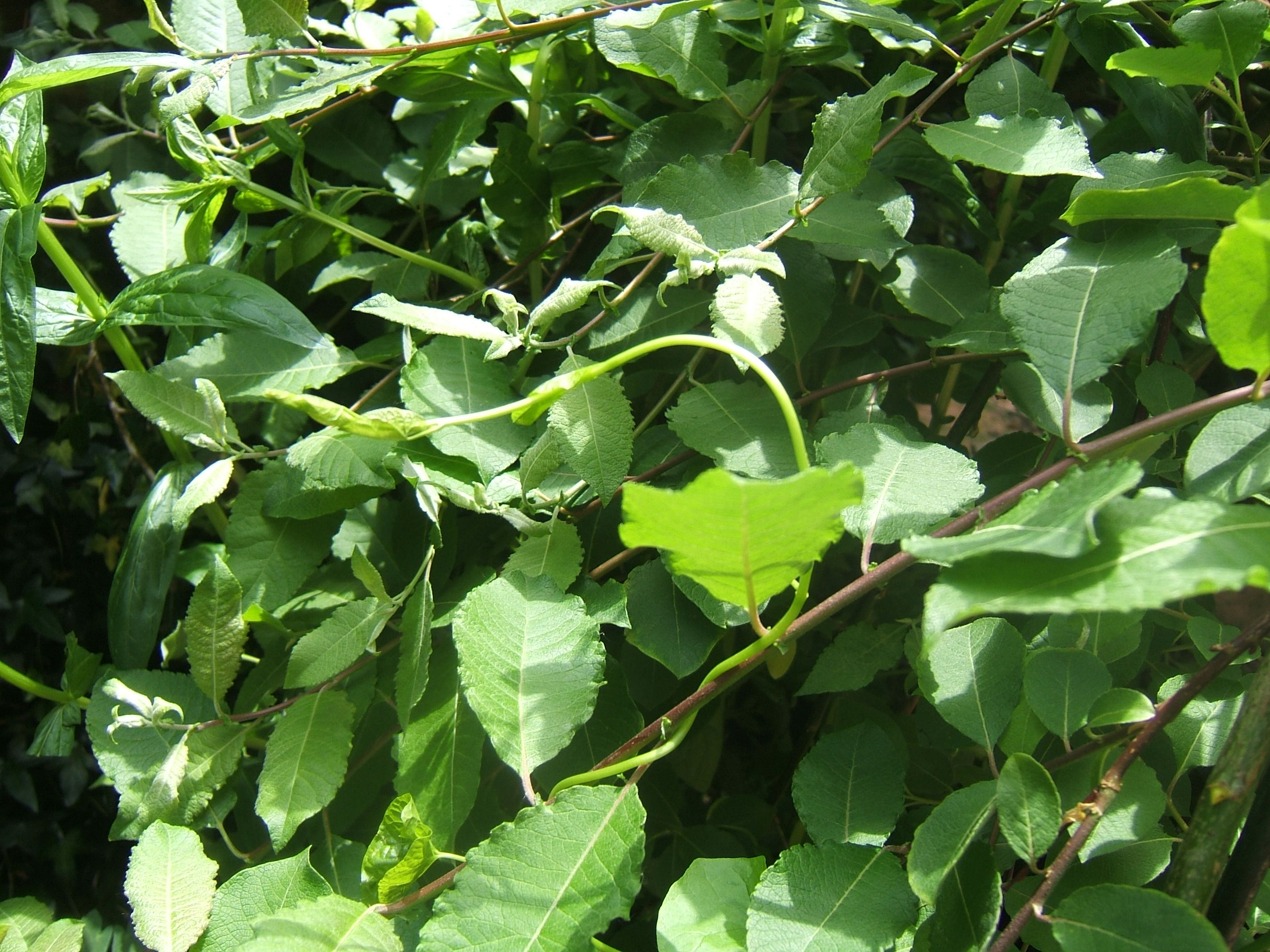
Whilst it is fairly easy to keep our own garden under control, many of us have neighbours who may not be as interested in gardening as we are.  This can lead to unwanted plants making their way across the boundary.  Some plants are ornamental even if they are unwanted, like the ivy that has come through from next door.

Look carefully and you can see bindweed in the Kilmarnock Willow

Look carefully and you can see bindweed twining through the Kilmarnock Willow

However, over the last few years, the ivy has been joined by that most pernicious of weeds – field bindweed (Convolvulus arvensis).  Unlike the more garden worthy morning glories, bindweed can quickly take over a garden and so has to be dealt with whenever you see it.  It twines itself around existing plants and is a real pain.  The best way to get rid of it is to dig and dig and dig – its roots can go down 5 meters and every little bit of root that is left in the ground can turn into a new plant!  Digging isn’t an option for me at the moment, I want to keep the border in tact.  So, I just pull out every bit I see and put it straight into the council’s green waste bags.  I make sure that not even a single leaf is dropped on the ground or in contact with any of my gardening tools, such as my weeding trug.  Not a single piece of this plant is going to have a hope of regrowth in my garden!

I have to be especially careful if the dogs are out in the garden with me when I pull bindweed.  Anya still thinks that plants are a very exciting toy when they are in my hands, so she is learning fast that they are mine and I will not let her grab them from me!

I hope you never have to cope with bindweed, it is a never ending battle, but one that has to be fought.

Every year, for the weeks and months before the garden opening, I am focused on getting the garden ready to meet its public.  The opening is a wonderful opportunity to make sure that everything in the garden is looking as good as it possibly can be on that weekend.  The downside of this is that a lot of other things in life are put on hold.  So, when the opening is over, my thoughts tend to move on to other important things that have been neglected.  This means that the garden tends to get on with things on its own in June.  Don’t get me wrong, I don’t avoid the garden.  I mow the grass, water plants and dead-head and prune where necessary, I just don’t have the garden at the fore front of my mind.  Now, that period is over for this year and I am back to thinking about the garden again.

NGS visitors 2013

NGS visitors 2013

Before I move on though, I thought you might like a quick update on the opening.  It was a lovely sunny weekend and we made over £200 for the NGS Charities.  I had been concerned that despite the dismal, cold weather we had this Spring, some visitors might have expected us to magically avoid all of it and have a garden with the plants that would normally be in flower in the first weekend of June.  Thankfully I was totally wrong.  People really appreciated the chance to see the Wisteria in all its glory :).

Certainly, over the years, I have come to learn that a different group of plants are in flower each time.  This highlights how it is impossible to plan one’s flowering for a particular time of year.  Yes, you can think that certain plants will be at their best, but you certainly can’t rely on that.  Particularly in a small garden, it is best to plan for a succession of flowering.In larger gardens, it may be practical to walk past areas not at their best, but in the size of garden that many of us have these days, every inch of space has to work hard!

We had a number of visitors making return visits, which was particularly gratifying.  This year, we had three canine visitors, but they were not necessarily as interested in the garden as their humans.  However, Anya was overjoyed to meet even more canine friends.

As soon as the opening was over, I did some major pruning in the hope that it wasn’t too late and that there would be some regrowth before next year.  We will just have to wait and see………………

« Previous PageNext Page »