Gardeners Diary


In life, it is always interesting to get a different perspective on something.

Recently I was able to get a view of my garden from one of the readers of this blog when Bobbie and Ron Gratz, whose garden is featured in the Dogs and their Gardens section of the site, came to visit.

Some of Bobbie’s photos are quite similar to ones that I have taken, but it was really interesting to see what caught her eye as she wandered around on a November morning.

I love this picture of the trellis around the pond with the rose and clematis that adorn it starting to change colour.  The blue of the post works so well with the blue sky, but this is a picture I would never have thought to take.
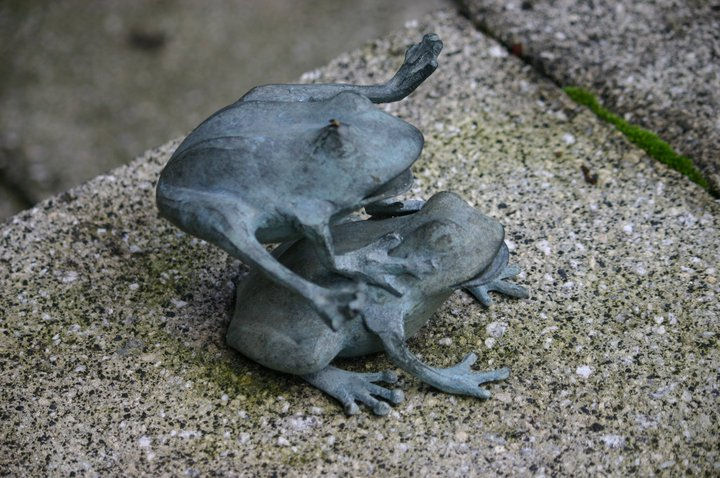
I love these frogs playing leapfrog – although some visitors are not always sure what they are doing – it depends on the angle they are viewed from.  I bought them in US and have never seen anything similar in UK.   I love the moss growing between the slabs that form the seat around the edge of the raised pond that is now their home.  I usually get rid of the moss whenever I pressure wash, despite wondering on many occasions whether I should leave it.  Maybe next time I will see if I can get the slabs clean whilst preserving the moss.

When I looked at this photo, I was really flummoxed.  I couldn’t think of where it could be – I don’t have a wooden bench anywhere in the garden.  I looked at the picture again and again and then I noticed the trellis in the background.  There is only one place in the garden where I have that sort of trellis.  I suddenly realised where the photo was taken.  Turned through 90°, the picture is a sideways on view of one of my Trachelospermum growing to create a green window.
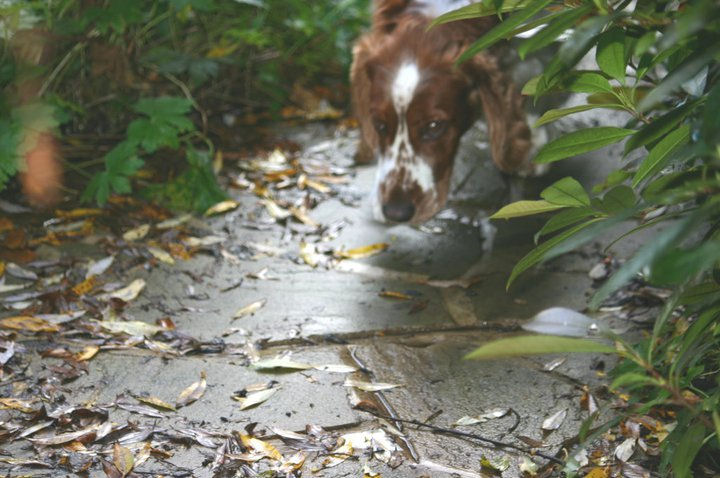
We had to have a photo with one of the dogs.  Here, Bobby has managed to get a feel of the garden from their perspective .  There is no doubt that this photo is taken outdoors and yet the garden is almost irrelevant to the story.  Far more important is the mission that Ruby is on – if only we could read her mind.

Thank you, Bobby, for introducing me to a new perspective on my garden.  Through your fresh eyes, I now have a whole new view of my outdoor space.
As winter approaches, thoughts move to tidying up in the garden.  Thankfully, the garden hasn’t yet totally succumbed to the weather.  The problem is that I am not allowed to do anything that would aggravate my hernia.  Lifting and gardening are out of the question at the moment.  Hopefully I should have an operation in a couple of weeks and then I can get back to normal, but for now I can’t even sweep the paths.

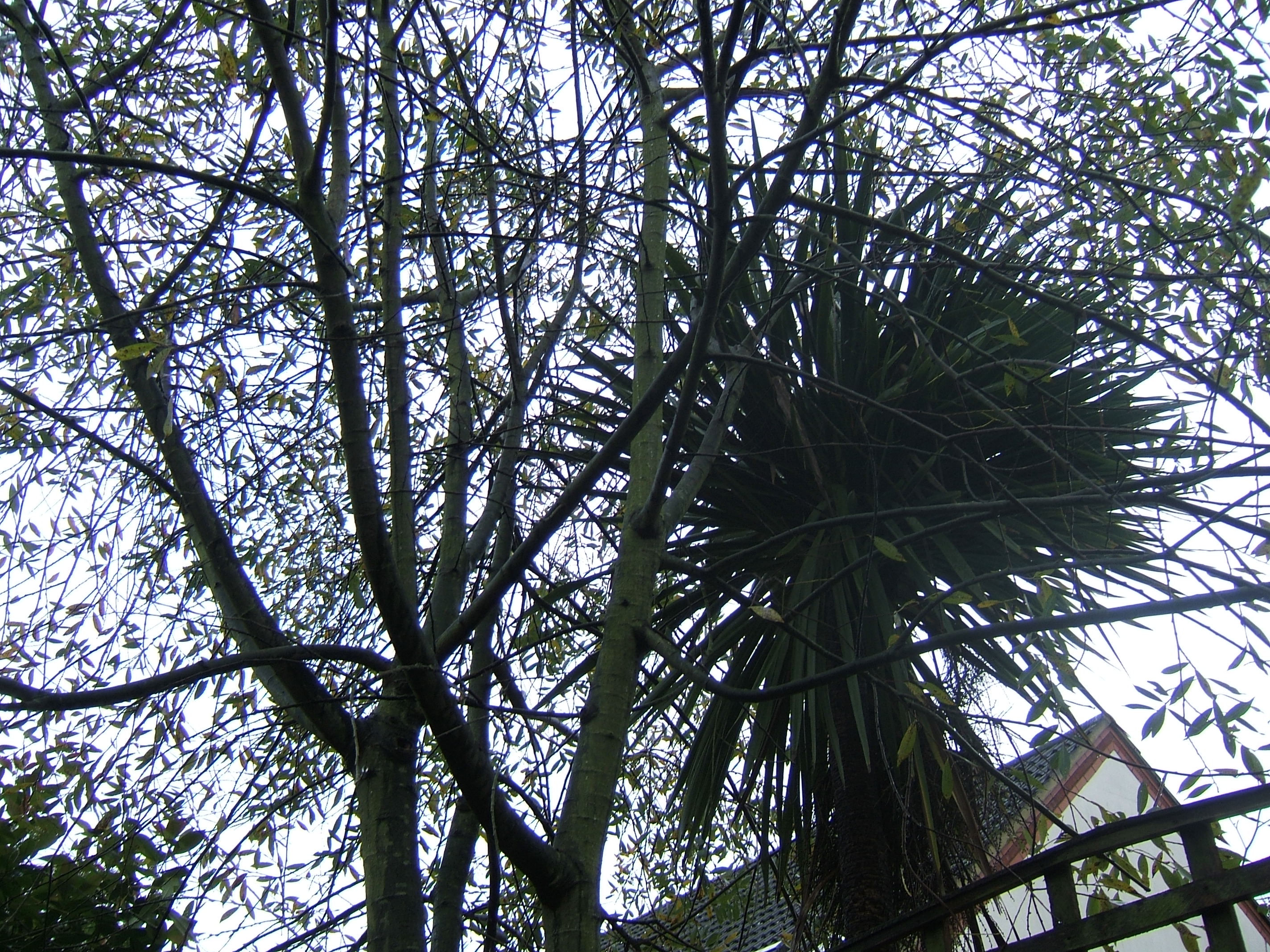
So, my thoughts must turn to plans for the garden.  I have a beautiful willow that I have always planned to pollard.  Pollarding is a very useful technique for keeping trees of a size suitable for their surroundings.  Tree roots will only grow as large as the canopy that they need to support, so there will be less chance of the roots having any impact on surrounding buildings.  An additional benefit from my perspective is that after a few years of being pollarded, the tree trunk takes on additional character even when it is not in leaf.  The downside may be that there is not very much leaf next year – we will have to wait and see how the tree takes to the process.

The trouble is that there are a couple fairly substantial branches that leave the main trunk a little too low and I am not sure which ones should be totally removed and where to start the pollarding.  While I am happy to do the actual work myself, my current plan is to find a tree surgeon who will give me the advice (for a fee of course) without necessarily having the job of doing the work.

For those of you who have wisteria, the winter prune should be done when the plant is dormant.  I try to do the job on 1 Jan or as close to that date as the weather conditions and work commitments allow.  I plan to video the process this year so that you can see where to prune and how much neater the plant looks when this year’s growth has been tidied up.  The added benefit of the winter pruning is that you will get even more flowers come the spring.

The roses are another group of plants that you need to think about pruning.  This is a good time to tidy up young roses that have not yet established a good root system.  I leave the main pruning until the spring. but where the plant has put on a lot of top growth, I shorten branches to half to two thirds  of their  height to reduce the impact of winter winds loosening them in the soil.

The rest of my shrubs get their hair cut in the spring when I can see the impact of the winter on them.  It seems a little non-productive to remove shoots that may survive the winter well and leave ones that might perish.  That said, I am very tempted to at least reduce the height of the cotinus that I have in front of the kitchen window.  I love the way it acts as a vegetative curtain, far enough from the window to let in light, but still screening us from neighbours.  However it is a little disconcerting when the plant reaches the height of the bedroom window.

At this time of year, many plants prepare to hibernate over winter.  Trees and woody climbers drop their leaves.  Herbaceous plants go brown and mushy.  There is a lot of work to be done tidying in the garden.

Amidst all this decay, some plants decide that they will have a second go at flowering, also known as a second flush.  There is a real joy to be found seeing the fight that the plants are prepared to have with the frosts that nature throws at them.  Frequently, the plant looses, but there has been the hope that they might win against all odds.

Portuguese Laurel - Second Flush

There are some plants that do this every year, whilst there are some that only find that the conditions are right for them in certain years.  The Portuguese Laurel seems to have a go every year, as does one of the roses on my pergola and the early flowering magnolia.

Last year I was amazed to see a hemerocallis (daylily) having a try.  I watched day by day as the bud swelled, wondering what each night would bring.  Eventually, just before it managed to flower, a frost got it – it was a valiant try.

« Previous PageNext Page »